From CCTV surveillance and access control to remote monitoring, technology is helping organisations build more connected and responsive security operations.
Why traditional security alone is not always sufficient
Physical presence remains the foundation of most security programmes. Guards at gates, supervisors on the floor and patrols around a perimeter still matter. What has changed is the scale and complexity of the environments those teams protect — larger campuses, more visitors, more vehicles, and more information moving through a site every day.
When security relies only on what an officer can see in the moment, gaps appear. A camera can cover a corridor when a post is unmanned. An access record can show who entered a restricted area after hours. A fire alarm can alert both the control room and the people on site. Technology does not replace professional personnel. It extends their reach and gives them information they can act on.
The role of CCTV surveillance
CCTV is often the first electronic layer organisations add. Used well, it is more than a recording device. Cameras support gate houses, parking areas, loading bays, reception lobbies and internal corridors. They help supervisors review an incident, confirm a report, and brief the next shift with a clearer picture of what happened.
Major Security designs electronic surveillance around the site, not as a standard package. Camera placement, recording, and how live views are used on site or in a monitoring station should follow the actual movement of people, vehicles and goods. Visibility is useful only when someone is responsible for watching, responding and documenting what they see.
Access control and visitor identification
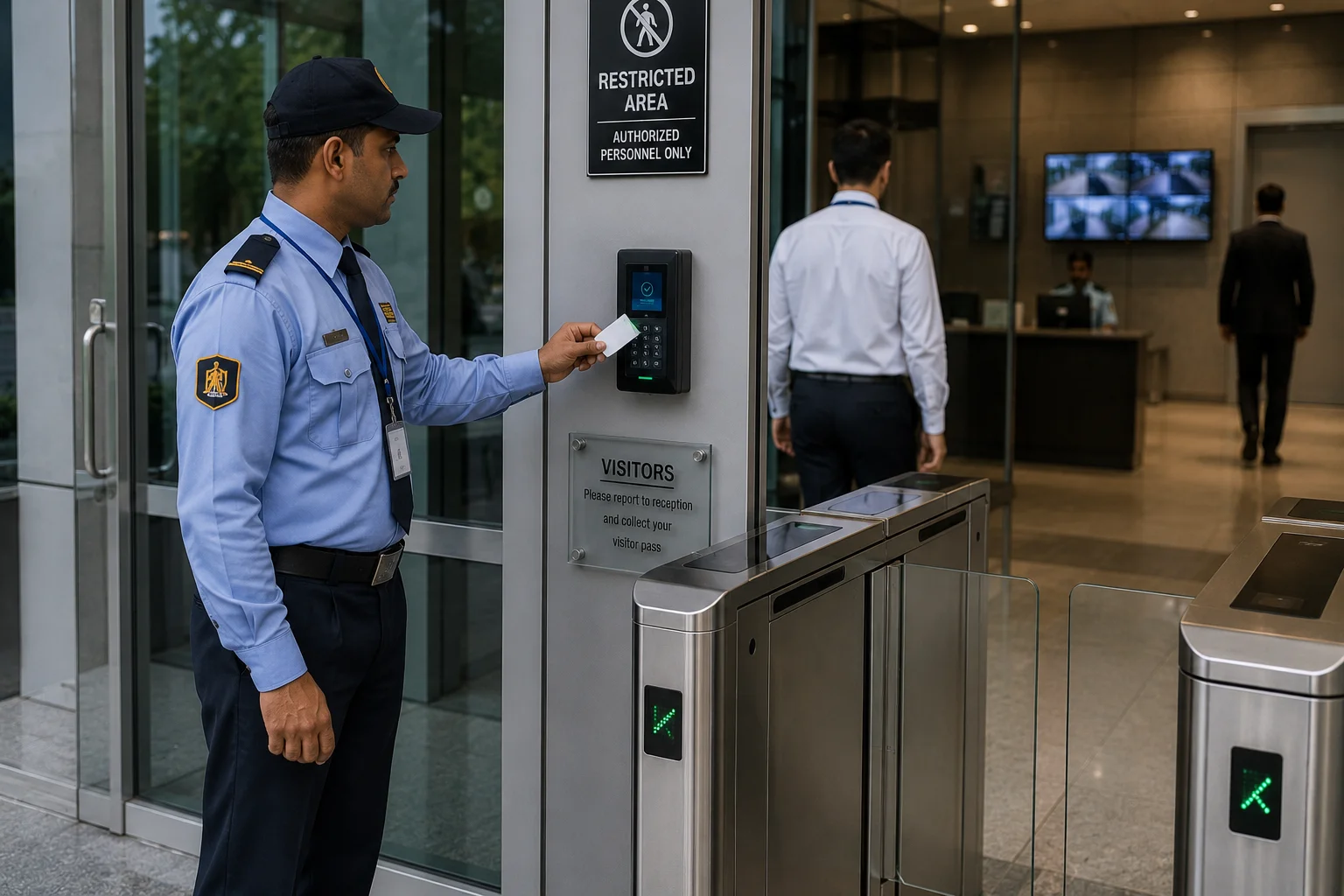
Access control answers a simple operational question: who is allowed in, where, and when. Card-based systems, visitor identification and staff credentials help a facility move from informal entry to a record of authorised movement. That record is as important as the lock itself. It supports investigations, contractor management and everyday discipline at the gate.
Visitor identification is especially relevant in offices, hospitals, industrial plants and financial premises. A receptionist or security officer who can verify a guest against an expected visit list reduces uncertainty at the first point of contact. Combined with CCTV at entry points, visitor processes become both more professional and easier to supervise.
Fire alarms, electronic locks and perimeter measures
Security technology is not limited to cameras. Fire alarm systems, electronic locks, electric fencing, road barriers and turnstiles each solve a different control problem. Fire systems support life safety and must sit alongside trained personnel who know how to respond, not only how to silence a panel. Electronic locks help restrict rooms, stores and plant areas without relying solely on a physical key register.
Perimeter tools — fencing, barriers and turnstiles — slow unauthorised movement and channel authorised traffic through points that can be staffed and monitored. They work best when the physical layout, the duty roster and the electronic systems are planned together. A barrier without a clear operating procedure is only hardware.
Fingerprint access, barriers and turnstiles
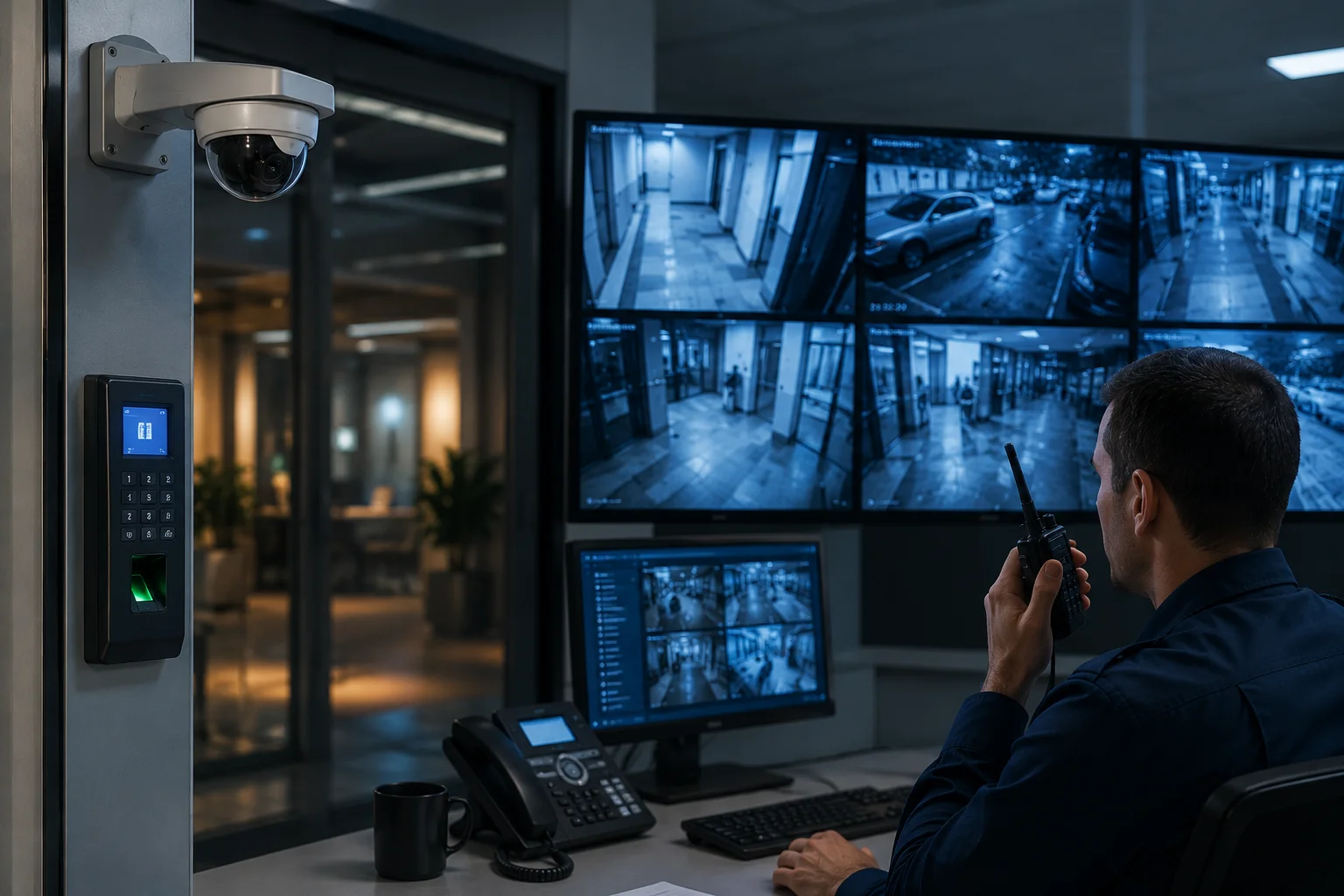
Fingerprint-based access control is one option where organisations need a higher level of identity assurance than a card alone, for example in restricted plant rooms or selected office floors. It is not required everywhere. The right choice depends on the sensitivity of the area, the number of users and how the system will be administered day to day.
Road barriers and turnstiles manage vehicle and pedestrian flow. They reduce the chance that a busy gate becomes an open corridor. Officers still make judgements — a delivery that does not match the expected list, a visitor without an escort — but the hardware gives them a controlled environment in which to make those judgements.
Remote monitoring and the role of people
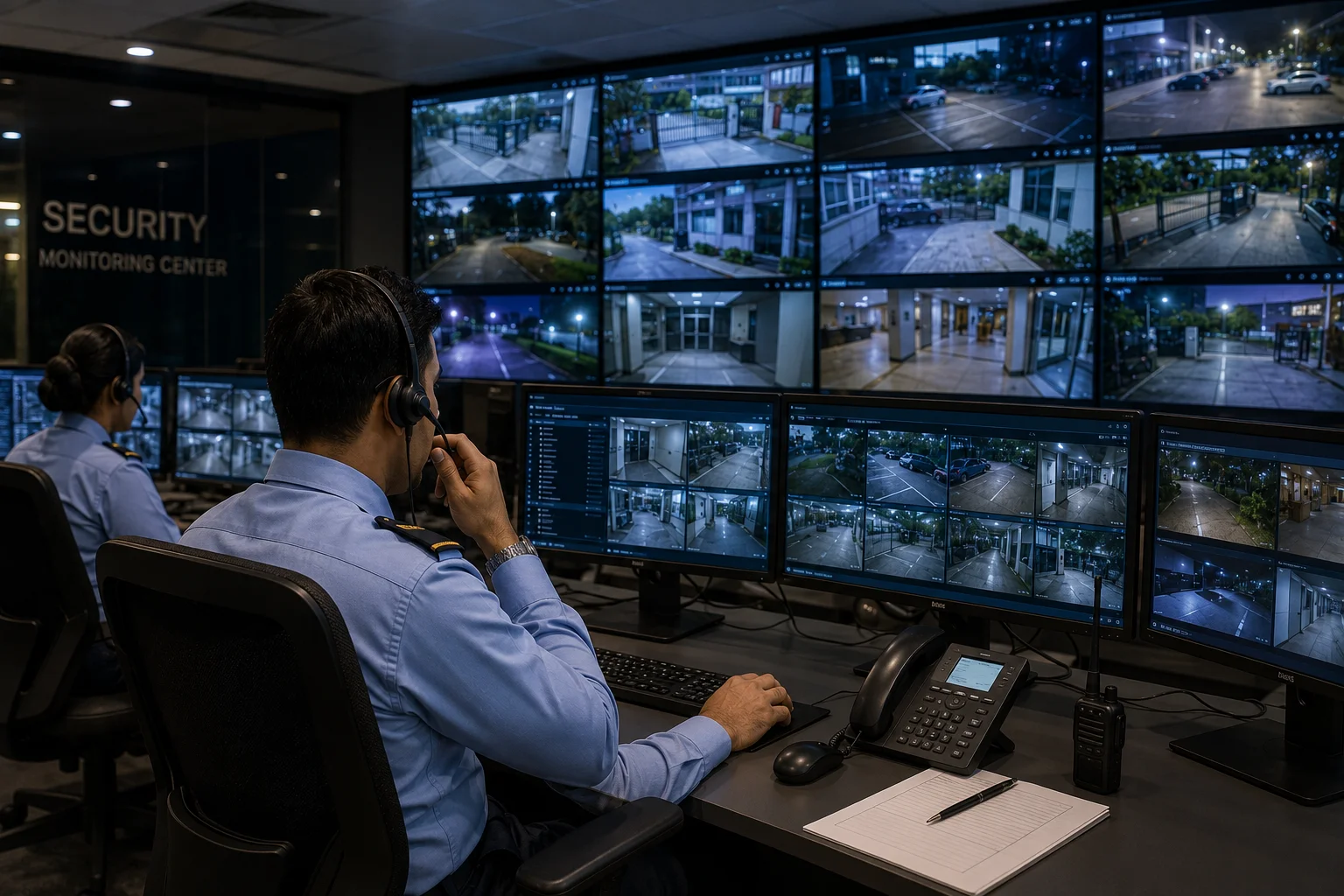
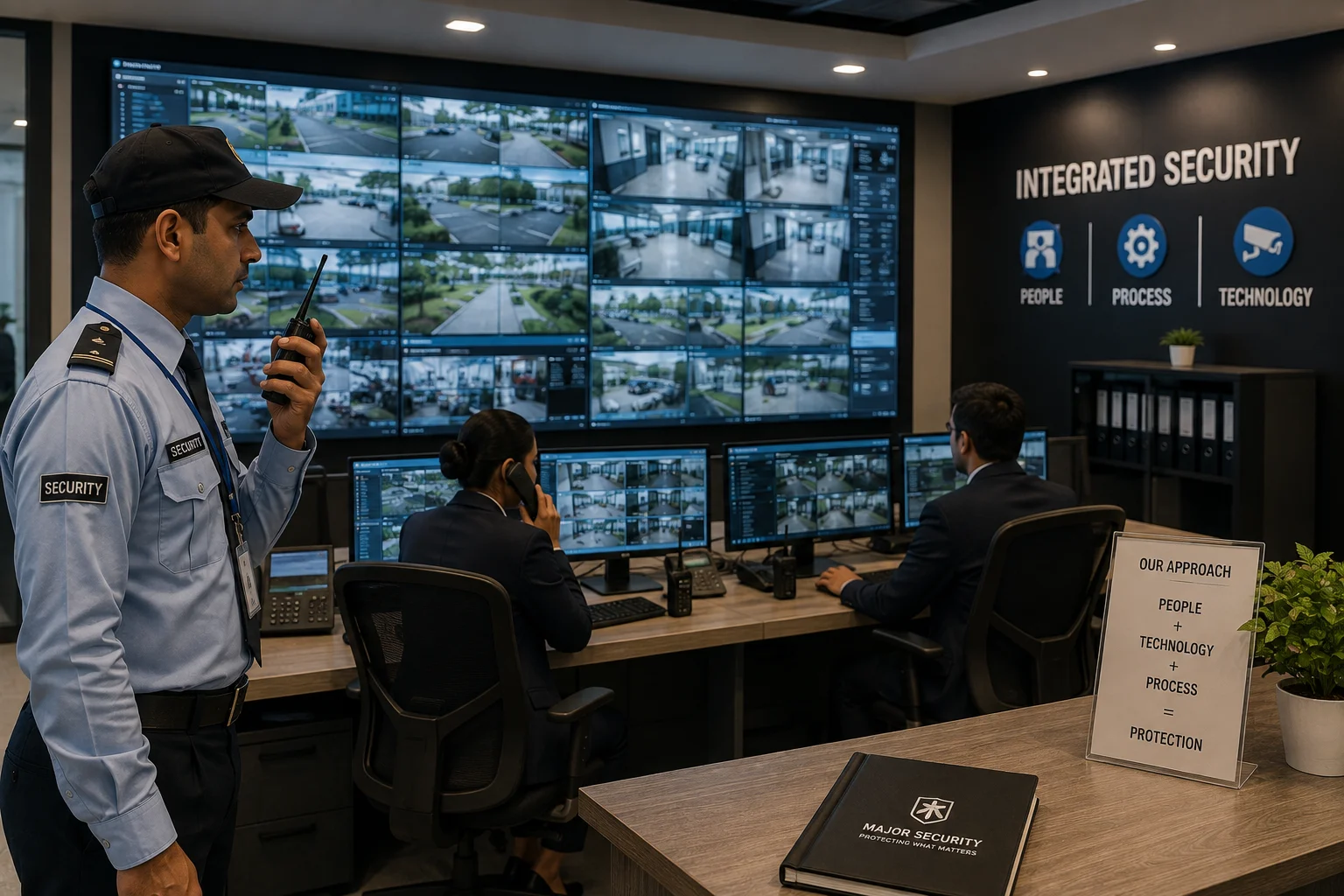
A computerised central monitoring station can watch cameras, access events and alarms throughout the year, including hours when a site is lightly staffed. Major Security’s monitoring approach is built around personnel who are used to evaluating risk, not only watching screens. Alerts still need human judgement: is this a genuine incident, a system fault, or a routine exception that the site team already knows about?
Technology supports security personnel when it is treated as a tool they are trained to use. CCTV operators, supervisors and response teams need clear escalation paths. Wireless communication equipment, patrol support and detection systems only add value if the people on the ground know when to call, when to attend and how to record the outcome.
How organisations can evaluate their security technology requirements
Start with the site, not the catalogue. Due diligence should cover entry points, shift patterns, visitor volume, high-value areas, and what already exists. A warehouse with heavy vehicle movement will not need the same mix as a corporate office. A bank branch will emphasise access discipline and surveillance in ways a public event venue will not.
Ask practical questions. Who will monitor live views, and during which hours? How will a fire alarm or access exception reach a supervisor? Which doors genuinely need electronic control? Which cameras exist to deter, and which exist to investigate? Integration with on-site manpower is the test: if the system cannot be supervised, reported and maintained, it will not strengthen the operation.
Talk to Major Security about your security requirements. A structured conversation about people, systems and site conditions is a more reliable starting point than adding equipment in isolation.