Strong security is rarely built around a single solution. Effective protection combines people, technology and structured operational processes.
Security is rarely a single solution
Organisations sometimes look for one product that will close the risk: more cameras, a new access system, or additional guards. Each of those can help. None of them holds a site together on its own. A camera without an operator is a recording. A guard without a procedure is a presence. A procedure nobody is trained to follow is a document.
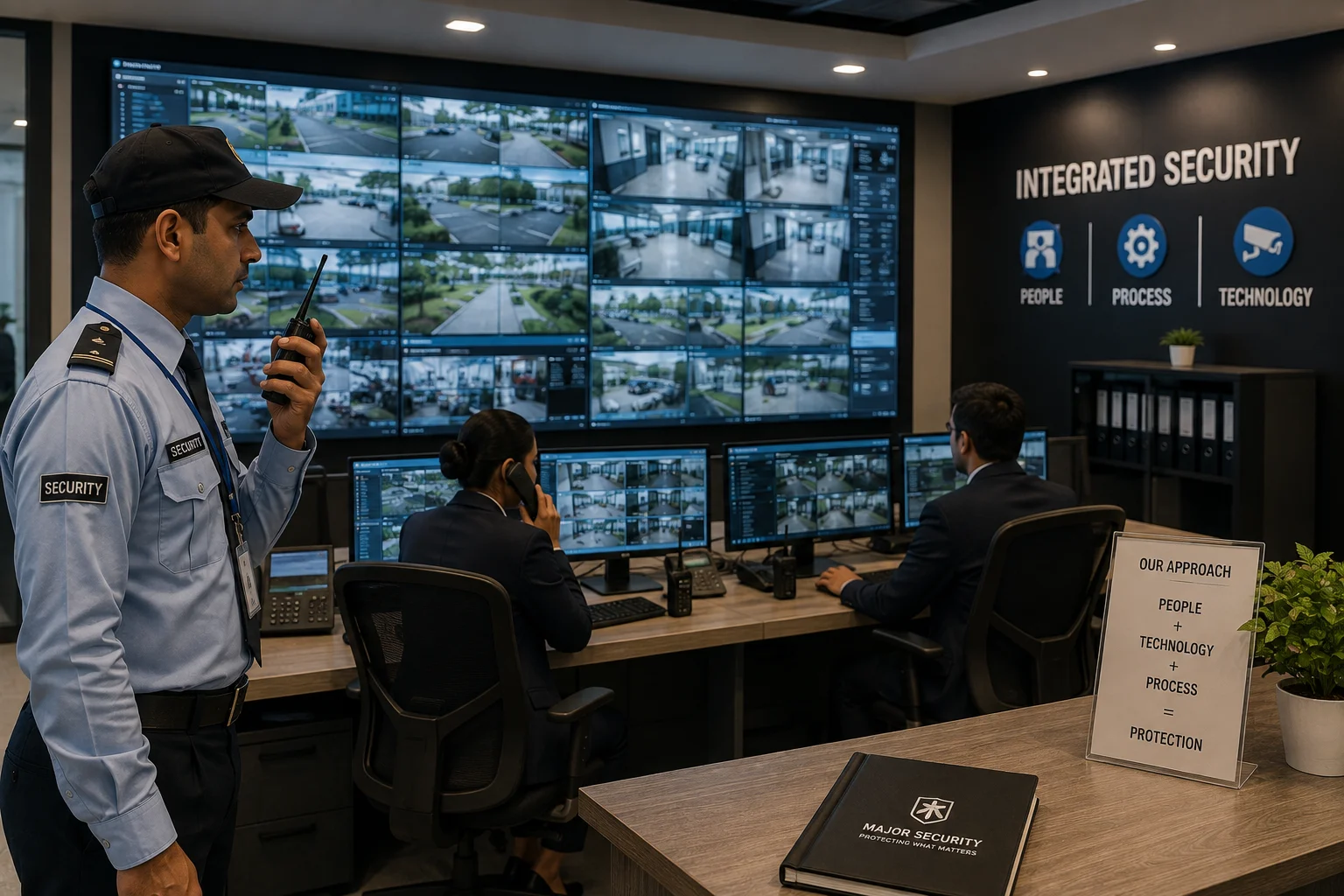
Major Security’s model is integrated by design: professional manpower, operational planning, surveillance and protection capabilities arranged around what the client actually needs. The three pillars — people, technology and process — are how that model is explained in practice.
This is also how client conversations stay honest. If a site needs better reporting, more cameras will not fix it. If a site needs better visibility after hours, another untrained post may not fix it. Naming the missing pillar is more useful than adding activity in the other two.
People
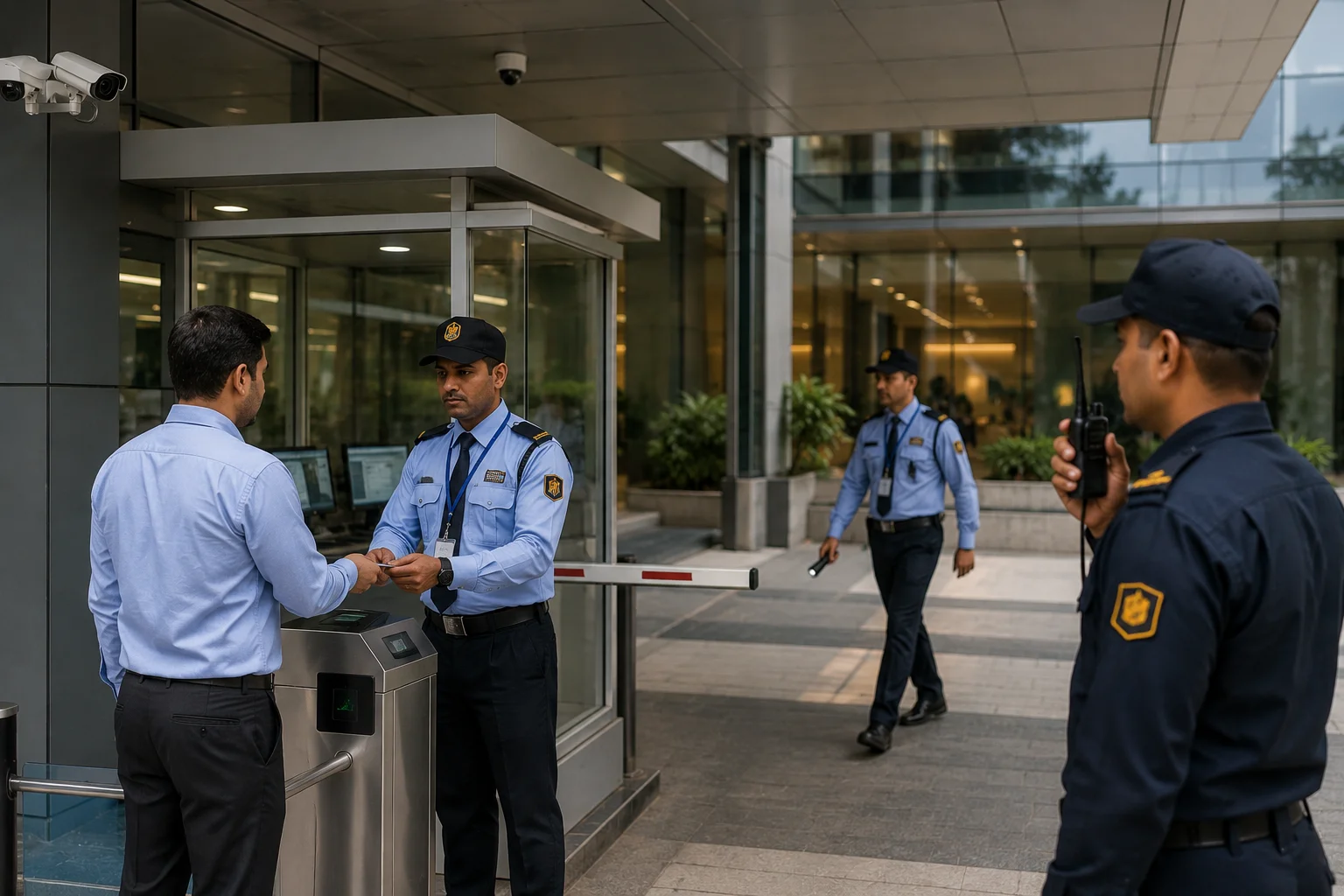
People are trained security personnel, supervisors, response teams and security operators. They staff gates, patrol, receive guests, watch cameras, and make the first decisions in an incident. Recruitment, screening, site briefing and refresher training determine whether those decisions are consistent.
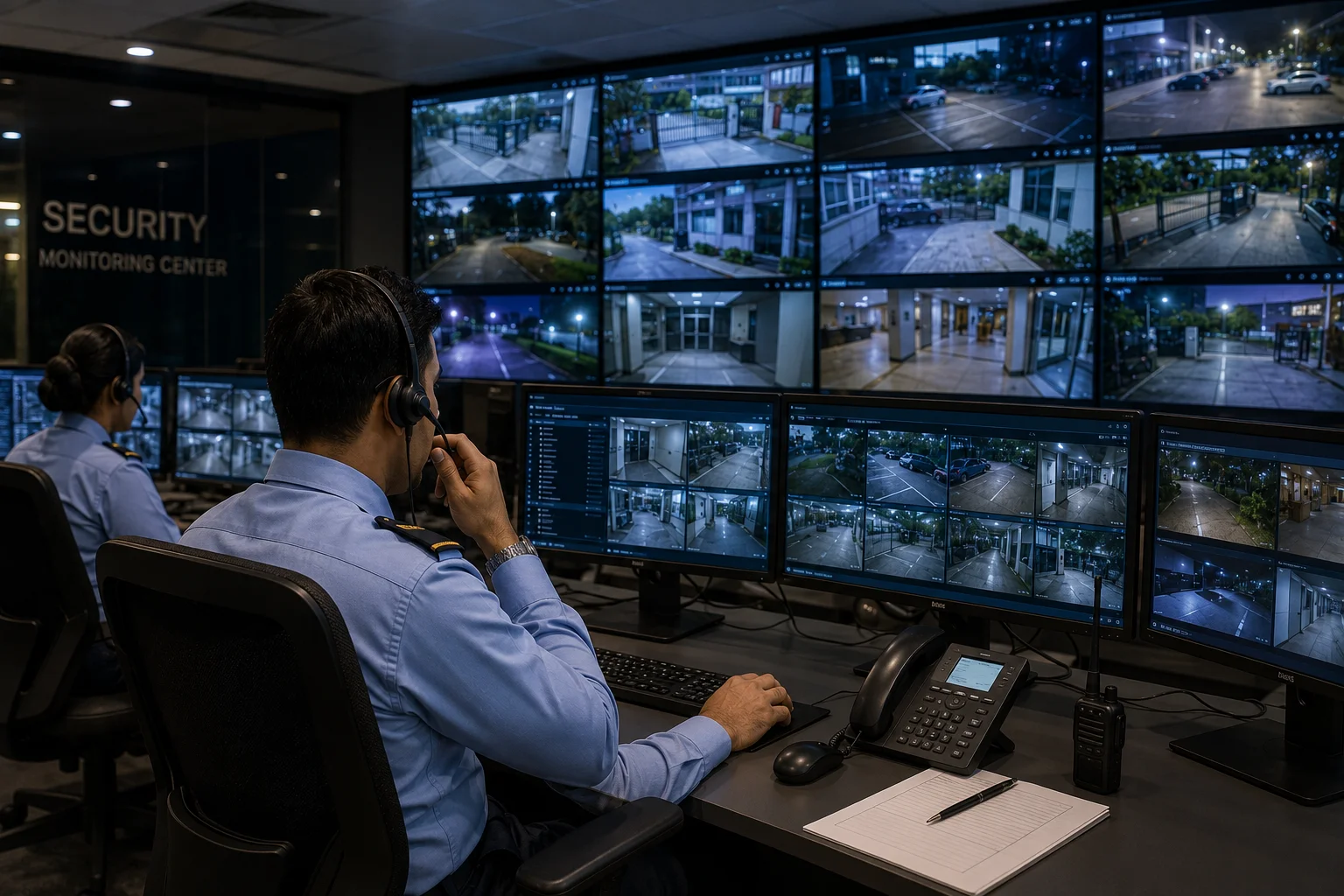
Supervisors keep standards across shifts. Response teams and mobile support close the gap between an alert and attendance. Operators in a monitoring environment filter noise from genuine events. Without this layer, technology has no one to serve and processes have no one to carry them out.
- Trained security personnel on site
- Supervisors accountable for posts and reporting
- Response support when an incident needs attendance
- Operators who can interpret cameras, access events and alarms
Technology
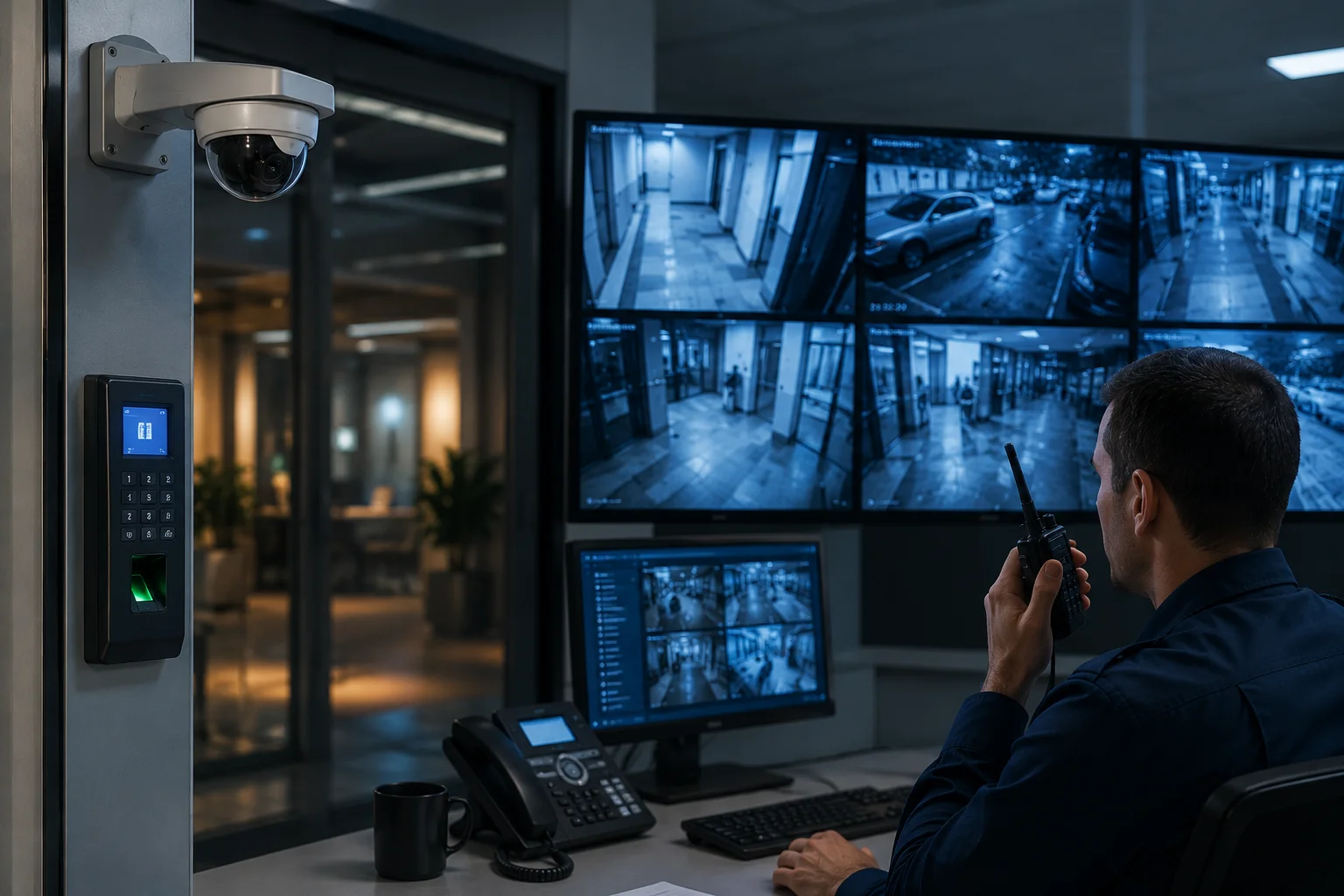
Technology includes CCTV, access control, remote monitoring, alarm systems and communication equipment. Major Security specifies these according to the site: cameras where visibility is needed, access where movement must be authorised, monitoring where hours or geography require a second pair of eyes, alarms where fire or intrusion must be announced, and radios or equivalent tools so the team can speak as one.
The test is use. A system that is not maintained, not briefed, and not connected to a person who will act is not an integrated layer. It is inventory.
- CCTV for visibility and review
- Access control for authorised movement
- Remote monitoring where continuous watch is required
- Alarm and communication systems that reach the right people
Process
Process is how the work is organised: site assessment and due diligence, security planning, reporting, performance evaluation, incident management, emergency procedures and continuous improvement. Major Security’s operating sequence — understand the requirement, assess the site, design the deployment, put people and systems in place, then monitor and improve — is process in plain language.
Incident management and emergency procedures only work if they are known on the shift, not only in a head-office file. Performance evaluation is how a client sees whether posts are filled, reports are timely and issues are closed.
- Site assessment before design
- Clear reporting and incident handling
- Emergency procedures the team can actually run
- Review and adjustment as the site changes
How the three layers work together
A loading-bay incident is a simple illustration. Technology may show the vehicle and the door. People attend, speak to the driver and secure the area. Process tells them who to call, what to write and whether the next shift needs a briefing. Remove any one layer and the outcome is weaker: footage without action, action without a record, or a record of something nobody was equipped to handle.
Integrated security is not about adding more systems. It is about making every layer work together. Discuss your security requirements with Major Security if you want that conversation to start from the site you actually operate, not from a catalogue of disconnected tools.