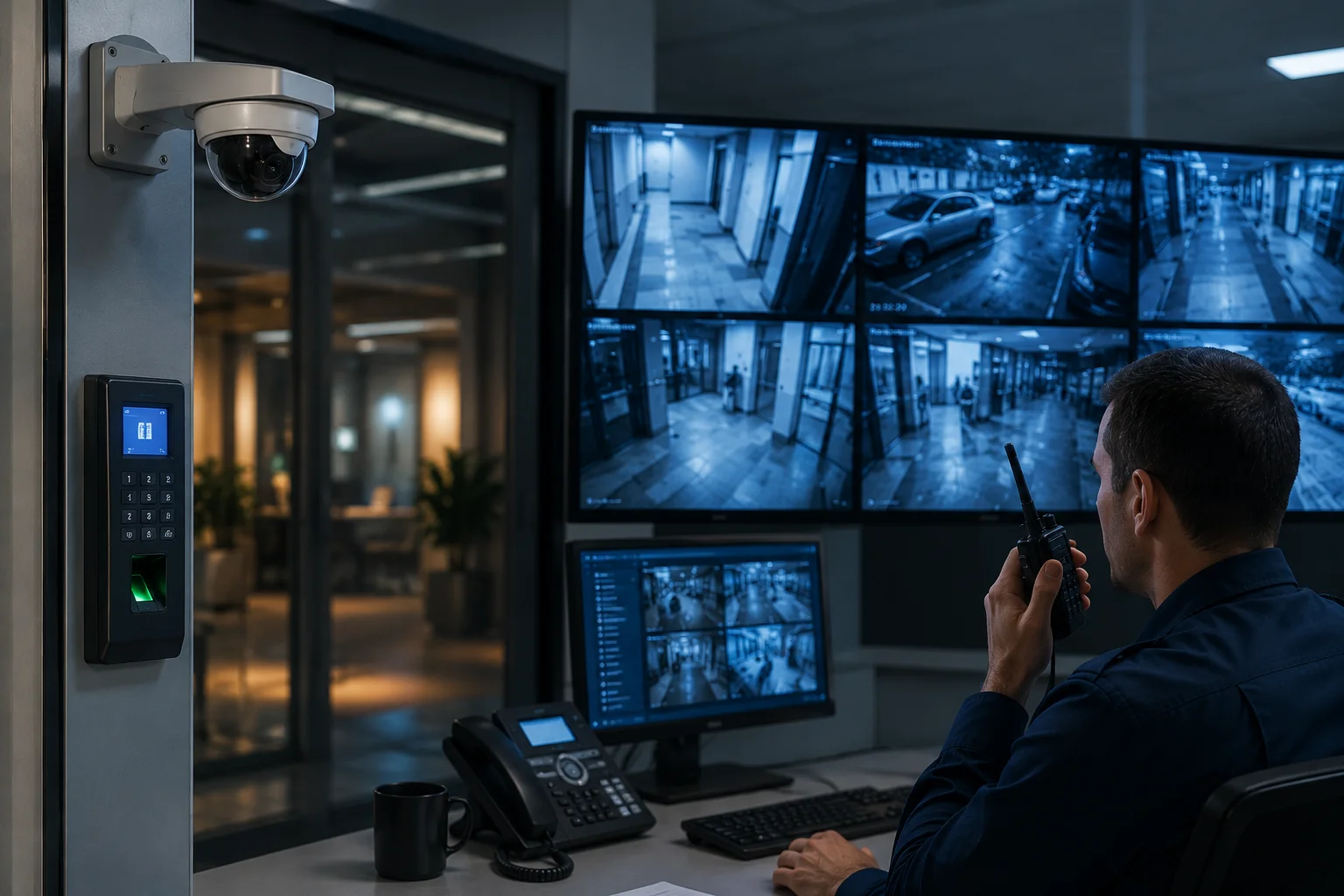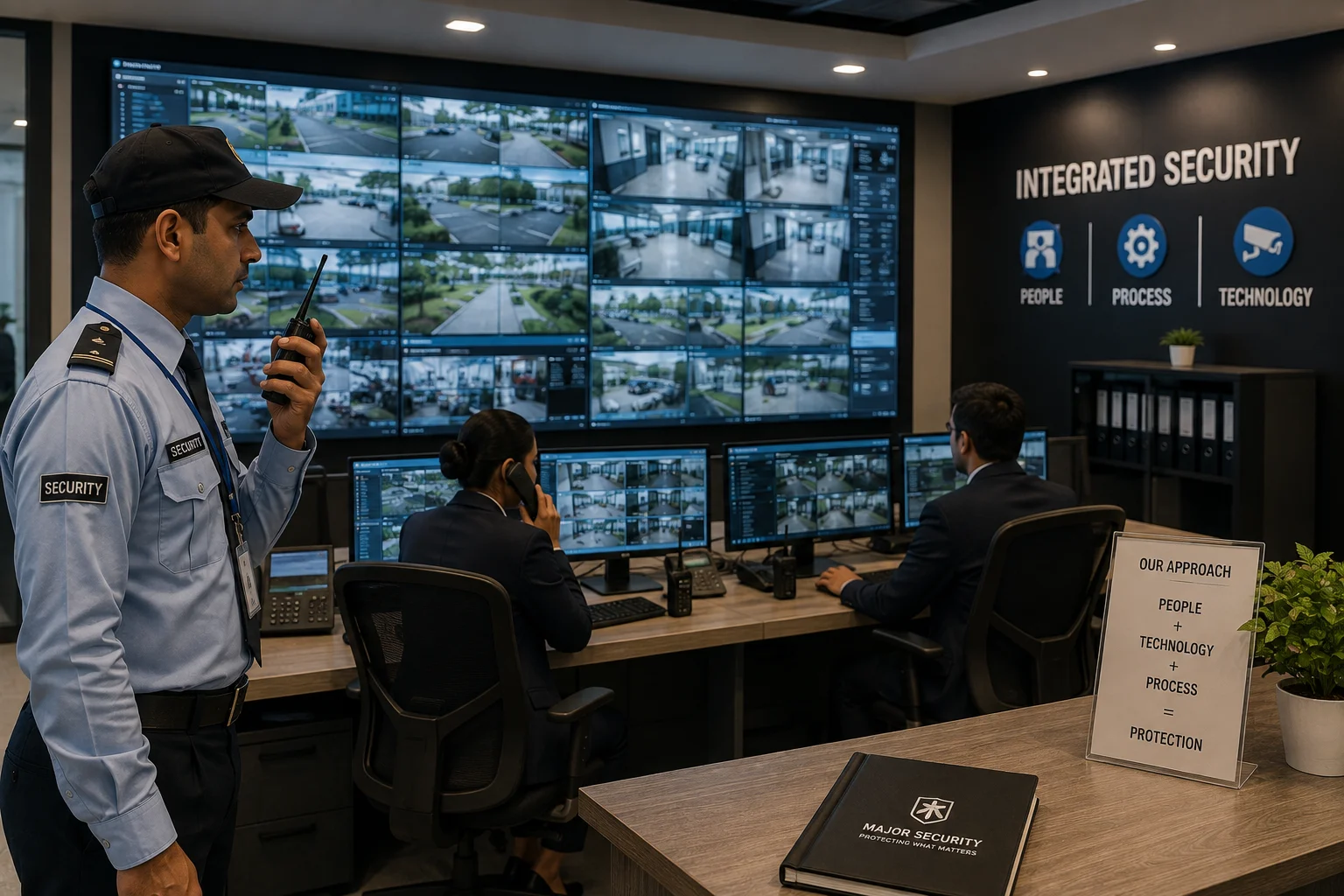
Remote monitoring can provide organisations with continuous visibility while complementing on-site security personnel and response capabilities.
What remote monitoring means in practice
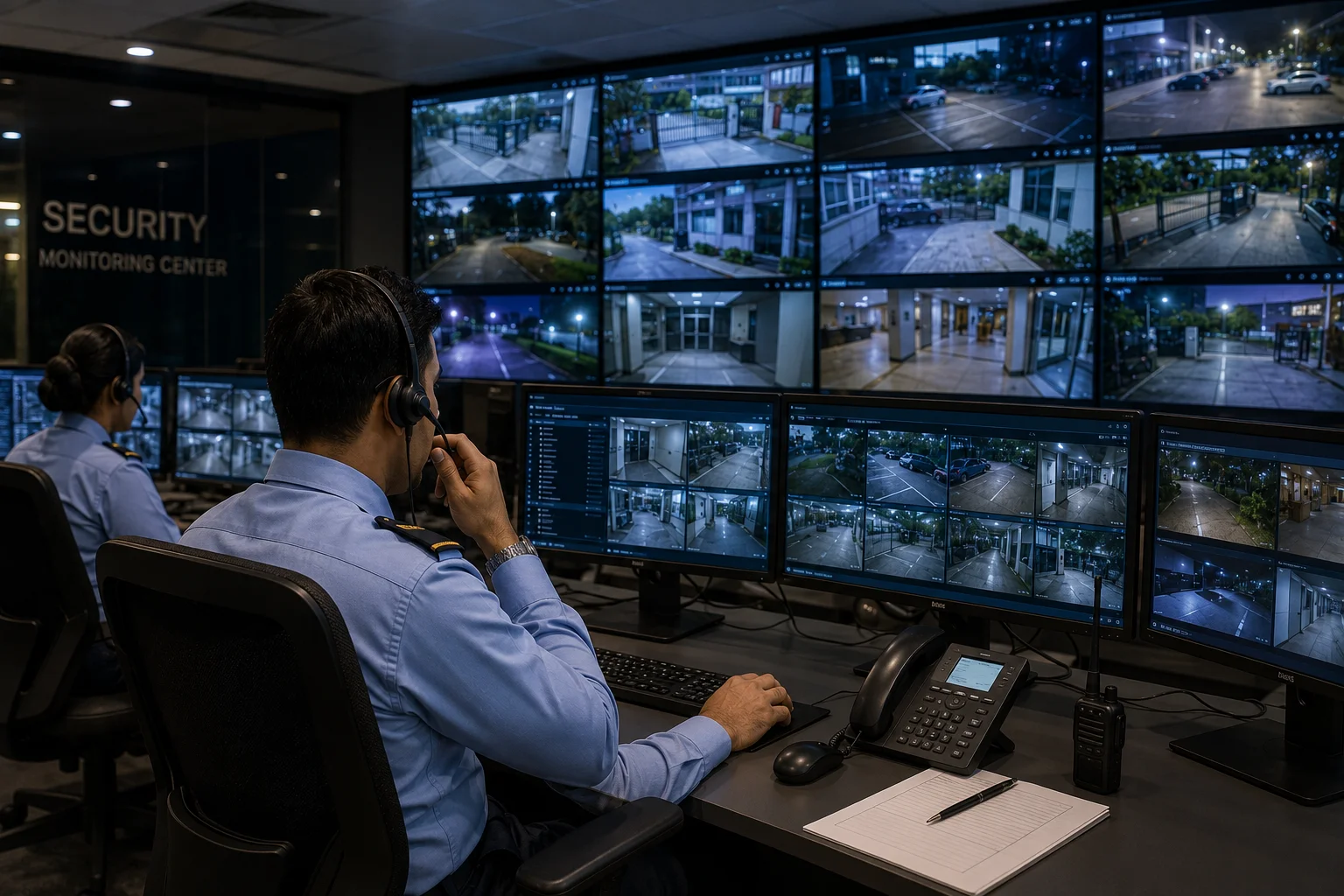
Remote monitoring is the organised watching of a site’s electronic systems from a location that is not the site itself. Cameras, access events, alarms and selected facility signals can be observed by trained operators who know how to interpret them and who to call. It is not a substitute for every on-site post. It is a way to keep visibility when a location is closed, lightly staffed, or spread across more ground than a single shift can cover in person.
Major Security provides electronic surveillance according to client requirements, supported by a computerised central monitoring station intended for round-the-clock monitoring through the year, with personnel experienced in evaluating risk.
CCTV monitoring and access control monitoring
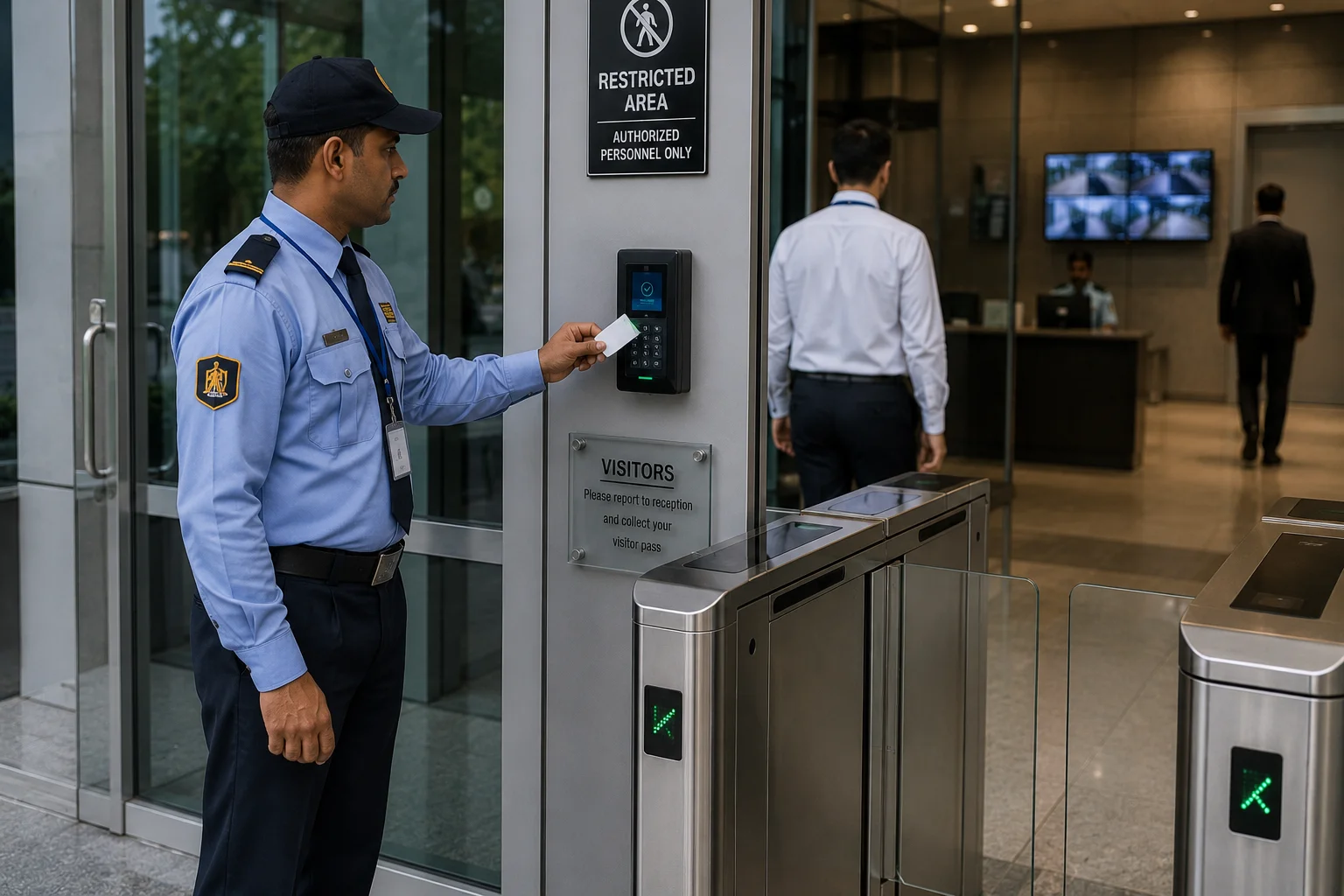
CCTV monitoring gives operators live or near-live views of gates, yards, interiors and other agreed camera groups. The value is in exception handling: movement where none is expected, a door held open, a vehicle in a restricted bay. Access control monitoring adds another layer — unusual credential use, forced-door signals, or a pattern of after-hours entries that the site team should know about.
These feeds are useful only when the operator has a current picture of the site: who is supposed to be there, which cameras matter at which hours, and what a normal night looks like. That briefing is part of setting up monitoring, not an afterthought.
It is also important to agree what will not be monitored. Not every camera needs to be live at every hour. A focused list of priority views — gates, high-value stores, plant rooms — is usually more effective than asking a control room to watch everything at once.
Security helpdesk, asset tracking and facility monitoring
A security helpdesk with control-room functionality gives the client a single point of contact for alerts, status checks and coordinated response. Asset tracking and building or facility monitoring extend the same idea to equipment, plant areas and selected systems the organisation wants watched alongside traditional security.
Lone-worker protection is relevant where staff operate alone in yards, plant rooms or remote parts of a campus. Monitoring does not remove the need for site procedures. It can, however, shorten the time between a problem and a call to the people who can help.
Human operators and mobile response
Screens do not close incidents. Operators do. They filter false alarms, speak to site contacts, and escalate when the situation requires attendance. Mobile response and patrol support sit next to monitoring: an alert that is confirmed as genuine still needs someone to go to the location, check conditions and report back.
The relationship should be explicit. Who does the operator call first — the site supervisor, the client contact, or a response team? What is the expected time to acknowledge? What is written down afterwards? Without those answers, remote monitoring becomes a stream of messages rather than a security process.
When to consider remote monitoring — and how to escalate
Organisations typically look at remote monitoring when they need coverage outside core hours, when they have multiple locations, or when they want a second pair of eyes on high-value areas without placing a dedicated control room on every site. It is also relevant where existing cameras are underused because nobody is assigned to watch them.
Reliable escalation procedures are the difference between a useful service and a noisy one. Define alarm types, contact trees, and what constitutes a closed event. Review the arrangement as the site changes. Remote monitoring extends security beyond the physical post; it still depends on people, process and a clear link to whoever will attend.